Posts tagged michael findlay
Reading the Art World: Matthew Affron

Image courtesy of the Philadelphia Art Museum

Listen on Spotify and Apple Podcasts

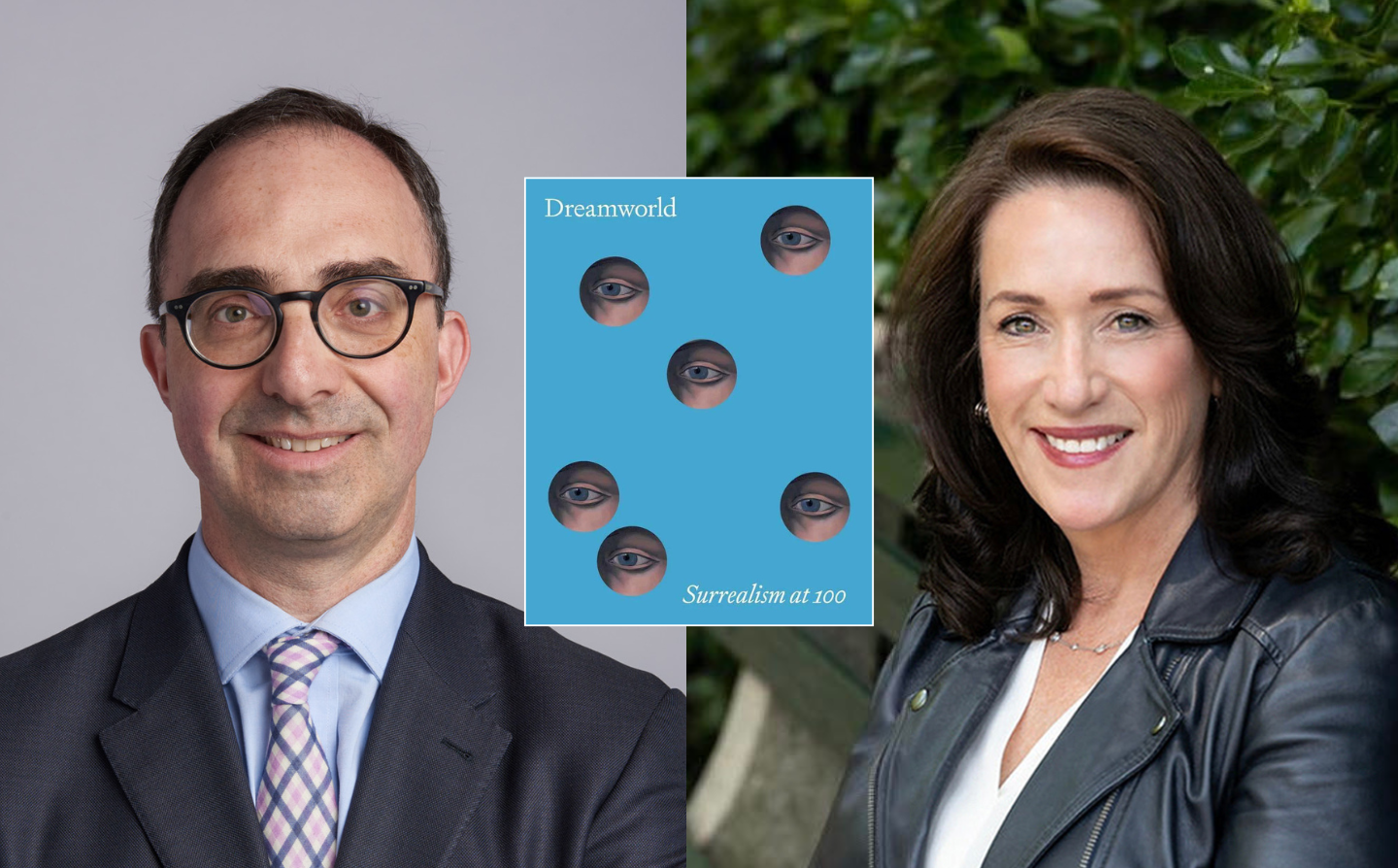
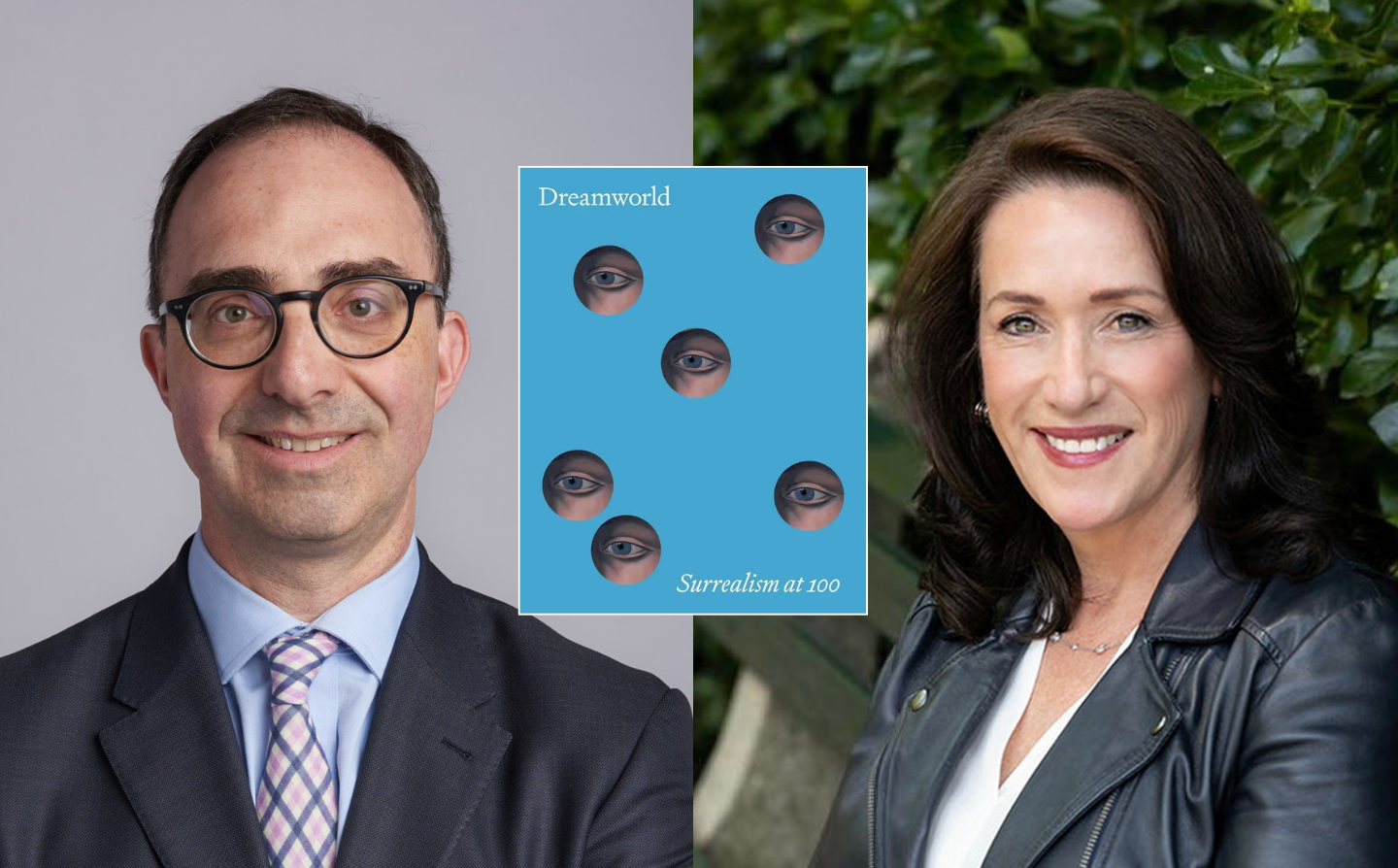
Listen to our latest podcast episode featuring Matthew Affron, Muriel and Philip Berman Curator of Modern Art at the Philadelphia Art Museum, discussing his book Dreamworld: Surrealism at 100, published by Philadelphia Art Museum and distributed by Yale University Press.

Affron traces Surrealism from its 1924 origins in André Breton's manifesto—which asked "how should we live?"—to its evolution as both an artistic movement and a philosophy of liberation. The conversation reveals how Surrealism emerged not as a singular style but as a set of strategies for merging dream and reality, expressed through automatism, collage, found objects, and juxtaposition—techniques designed to bypass conscious control and access the unconscious.

Our conversation examines how the movement's early lyrical explorations gave way in the 1930s to urgent responses to fascism's rise, with monsters and hybrids becoming visual metaphors for political evil. Affron discusses the wartime diaspora that scattered artists from Paris to Mexico City and New York, transforming Surrealism from a Parisian phenomenon into an international force that drew on indigenous North American imagery alongside European traditions. He explains why Surrealist images are not transcriptions of dreams but invitations into unstable territory where thinking, desiring, and imagining intersect—and why these works reward openness to surprise over attempts at simple interpretation.

For anyone interested in modern art's avant-garde movements, the intersection of art and politics, or how creative communities adapt under pressure, this episode offers essential insights into a movement whose techniques are now embedded in popular culture and whose questions about imagination and freedom remain urgent today.

" Yes, surrealism put forward an idea of the image as a picture of dreams or hallucinations from the mind's eye as opposed to direct representations of the familiar concrete world.

However, on the other hand, I think art comes from art. And many of the techniques and imagery that you find in surrealist works come from other art. But they are put together in a creative and original way. And to me that is a very useful way of thinking about where does this art come from.”

– Matthew Affron


Listen to this podcast on Spotify and Apple

Order the book here

Learn more about the podcast Reading the Art World here.


About the Author

Matthew Affron is the Muriel and Philip Berman Curator of Modern Art at the Philadelphia Art Museum. He holds a Ph.D. in art history from Yale University and has published extensively on early abstract art, Fernand Léger, and modern art's relationship to politics. His previous books include Paint the Revolution: Mexican Modernism, 1910–1950, The Essential Duchamp, and Inventing Abstraction, 1910-1925. A specialist in the work of Fernand Léger, Affron has curated and co-curated several major exhibitions at the Philadelphia Art Museum and other institutions.

About the Exhibition

Dreamworld: Surrealism at 100 is on view at the Philadelphia Art Museum through February 16, 2026. The exhibition features approximately 200 works by more than 70 artists, with highlights including Joan Miró's Dog Barking at the Moon (1926), Salvador Dalí's Soft Construction with Boiled Beans (Premonition of Civil War) (1936), and Dorothea Tanning's Birthday (1942). Philadelphia is the sole North American venue for this international centennial celebration, following distinct iterations at the Centre Pompidou in Paris, and museums in Brussels, Hamburg, and Madrid. Learn more here: https://www.visitpham.org/exhibitions/dreamworld-surrealism

Reading the Art World: Megan Fontanella

Listen on Spotify and Apple Podcasts

Listen to our latest podcast episode featuring Megan Fontanella, Curator of Modern Art and Provenance at the Solomon R. Guggenheim Museum, discussing her book Gabriele Münter: Contours of a World, published by Guggenheim Museum Publications, distributed by Artbook DAP.

Fontanella reveals the career of Gabriele Münter, a pioneering German Expressionist and cofounder of Der Blaue Reiter (The Blue Rider), whose bold use of color and form helped define early modernism—yet whose contributions have long been overlooked in art history. The conversation traces how Münter developed her distinctive visual language, one that sought to "convey an essence" rather than imitate reality, offering an alternative to the pure abstraction favored by many of her modernist contemporaries, including Vasily Kandinsky.

Our conversation addresses one of the most compelling aspects of Münter's legacy: her actions during World War II, when she hid major works by herself and other Blue Rider artists in the basement of her house in Murnau, Germany, protecting them from Nazi confiscation. Without her courage, a vital chapter of modern art history might have been lost. Fontanella traces Münter’s path from her early photographic experiments during travels in the United States (1898–1900) to her bold paintings that reimagined landscape, still life, and portraiture through radical simplification and color.

For anyone interested in German Expressionism, the recovery of women artists’ legacies, or the collaborative networks that shaped early 20th-century modernism, this episode offers essential insights into an artist whose vision continues to inspire—and whose work deserves far greater recognition.

The beautifully illustrated volume accompanies the first major U.S. retrospective of Münter’s work and brings new research to light through essays, archival material, and restored provenance histories.

"Focusing on Gabriele Münter, we have an opportunity to demonstrate that there are multiple modernisms—there are different ways of approaching avant-gardism and radical art that go beyond prevailing narratives that center abstraction... In Münters adherence to subject matter like a still life, or landscape, or a portrait, she was just as radical and groundbreaking."

– Megan Fontanella


Listen to this podcast on Spotify and Apple

Order the book here

Learn more about the podcast Reading the Art World here.


About the Author

Megan Fontanella is Curator of Modern Art and Provenance at the Solomon R. Guggenheim Museum. Since joining the curatorial staff in 2005, she has organized or co-organized over thirty exhibitions across the Guggenheim's museums in Bilbao, New York, Venice, and formerly Berlin. Major exhibitions include "Vasily Kandinsky: Around the Circle," "Visionaries: Creating a Modern Guggenheim," and "Giacometti." She is recognized as an expert in provenance research with a focus on World War II spoliation issues. Fontanella graduated from Dartmouth College with a BA in art history and received her MA from the Courtauld Institute of Art, London, where she specialized in late 19th-century French art.

About the Exhibition

Gabriele Münter: Contours of a World is on view at the Solomon R. Guggenheim Museum, New York, from November 7, 2025 through April 26, 2026. The exhibition presents over fifty paintings across three Tower galleries, alongside nineteen photographs Münter captured during her extended stay in the United States. Learn more here: https://www.guggenheim.org/exhibition/gabriele-munter

Reading the Art World: Susan Davidson

Listen on Spotify and Apple Podcasts

Listen to our latest podcast episode featuring Susan Davidson, curator and art historian, discussing her new book Tom Wesselmann: The Great American Nude, published by Gagosian and Almine Rech, in collaboration with the Estate of Tom Wesselmann. Distributed by Rizzoli International Publications, New York.

Davidson reveals the unexpected story behind one of Pop Art's most recognized series. Wesselmann arrived in New York with no art training and couldn't paint like his hero Willem de Kooning—a limitation that became the foundation for his distinctive approach. She traces how he built his visual language from found materials: candy wrappers, magazine clippings, working radios, even a leaf from his soup at Trader Vic's that ended up in his first portrait collage.

Our conversation examines how the Great American Nude series (1961-73) emerged from a color dream of red, white, and blue and evolved across one hundred works. Davidson discusses Wesselmann's strategic use of art history—placing reproductions of Matisse, Modigliani, and Rembrandt within his compositions as both homage and assertion of his place in their lineage. She illuminates the personal dimension often overlooked in these works: they were Wesselmann's sustained celebration of his relationship with Claire, his wife and inspiration.

For anyone interested in Pop Art's origins, how collections are built, or the ways personal vision intersects with cultural moment, this conversation offers valuable insights.

"He wasn't objectifying; he was actually celebrating his love and marriage with Claire. That's really what drove him in many ways."

– Susan Davidson


Listen to this podcast on Spotify and Apple

Order the book here

Learn more about the podcast Reading the Art World here.


About the Author

Curator and art historian Susan Davidson is an authority in the fields of Surrealism, Abstract Expressionism, and Pop Art with a specialty in the art of Robert Rauschenberg. Davidson is also an accomplished museum professional with over thirty-year’s experience at two distinguished institutions: The Menil Collection, Houston, and the Solomon R. Guggenheim Museum, New York.

Reading the Art World: Ian Wardropper

Photograph by Richard Renaldi

Listen on Spotify and Apple Podcasts

Listen to our latest podcast episode featuring Ian Wardropper, author and former director of The Frick Collection and author of The Fricks Collect: An American Family and the Evolution of Taste in the Gilded Age, published by The Frick Collection in association with Rizzoli Electa.

Wardropper traces the remarkable journey of Henry Clay Frick, who evolved from a hard-edged Pittsburgh industrialist into one of America’s most discerning collectors. He describes how Frick spent two decades developing his eye—beginning with contemporary American paintings before advancing to the rarefied world of Old Master acquisitions at the highest level of the market.

Our conversation delves into Frick’s distinctive collecting philosophy: a relentless emphasis on quality over quantity and a clear vision for creating refined settings in which masterworks of painting and decorative arts could coexist. For collectors and anyone curious about the making of great collections, this episode offers rare and valuable insights.

“Frick was much more careful, studious, looked for the great work coming on the market, did his research and was willing to spend quite a lot of money to get something if he really believed that it was by one of the best artists of great quality, good provenance and good condition.

These were the factors of particular interest to him.”

– Ian Wardropper


Listen to this podcast on Spotify and Apple

Order the book here

Learn more about the podcast Reading the Art World here.


About the Author

Ian Wardropper served as the Anna-Maria and Stephen Kellen Director of The Frick Collection for 14 years, leading the institution through its most transformative period, including the first comprehensive renovation in nearly 90 years and the innovative Frick Madison project. Previously, he held curatorial positions at the Metropolitan Museum of Art as Chairman of European Sculpture and Decorative Arts and at the Art Institute of Chicago for twenty years. A specialist in European decorative arts and sculpture, Wardropper oversaw ambitious exhibitions, a major capital campaign that raised $242 million, and pioneering digital initiatives including the acclaimed "Cocktails with a Curator" series. He holds a Ph.D. in art history from NYU and was named a Chevalier de l'Ordre des Arts et Lettres by the French Minister of Culture.

Reading the Art World: Sarah Roberts

Listen on Spotify and Apple Podcasts

Listen to our latest podcast episode featuring Sarah Roberts, curator of the landmark exhibition Amy Sherald: American Sublime, and editor of the accompanying catalog published by Yale University Press in association with the San Francisco Museum of Modern Art.

In our conversation, Sarah reflects on the distinctive formal and conceptual qualities of Sherald's portraiture—from her considered use of posture and gaze to the symbolic role of clothing, props and settings. She deliberately turns the focus from outward racial identities to her subjects' interior lives. Sarah discusses how these elements in Herald’s paintings operate together to invite a deeper, slower form of looking, where each subject is rendered with quiet dignity and strength.

We discuss the meaning behind the exhibition’s title, "American sublime" in Sherald's work, and how Sherald’s paintings expand our understanding of who deserves to be seen—and remembered—in American art. Sarah Roberts offers insights into her inclusion of Sherald’s portraits of Michelle Obama and Breonna Taylor in the exhibition, placing them in the context of the artist’s broader practice and showing how they remain consistent with her vision while subverting conventions of official portraiture..

“I think something similar is at work in Amy's portraiture, the stillness of the bodies, the stillness of the faces creates an expectation that we will bring our own thoughts, preconceptions, associations, to the act of looking.”

– Sarah Roberts


Listen to this podcast on Spotify and Apple

Order the book here

Learn more about the podcast Reading the Art World here.


About the Author

Sarah Roberts is Senior Director of Curatorial Affairs at the Joan Mitchell Foundation where she oversees the Foundation's Artwork and Archival Collections and the Joan Mitchell Catalogue Raisonné project. Since 2004, she has served in progressive leadership roles in the Department of Painting and Sculpture at the SFMOMA, and since 2020 as Andrew W. Mellon Curator and Head of Painting and Sculpture. A specialist in post-war American art, Roberts has organized significant exhibitions including major presentations of Robert Rauschenberg, Louise Bourgeois, Frank Bowling, and co-curated the Joan Mitchell retrospective that traveled internationally. Roberts holds degrees from the University of Texas at Austin and Brown University, and has contributed to numerous publications on contemporary art.

Reading the Art World: Michael Findlay

Listen on Spotify and Apple Podcasts

Listen to our latest podcast episode featuring Michael Findlay, influential art dealer, director at Acquavella Galleries, and author of Portrait of the Art Dealer as a Young Man, published by Prestel.

His memoir offers a captivating, firsthand account of New York's vibrant downtown art scene in the 1960s and '70s, when Findlay directed one of SoHo's first galleries. Through personal stories and vivid anecdotes, he shares his encounters with Andy Warhol, John Baldessari, Hannah Wilke, and numerous creative figures who defined this transformative era in American art.

Throughout our conversation, Findlay shares previously untold stories about the birth of SoHo's gallery scene and offers rare insights into how today's art market evolved from those experimental beginnings. For collectors, artists, and anyone interested in cultural history, Findlay's perspective on what made this era so distinctive is invaluable.

“The memoir is actually not so very different from [my other books, The Value of Art and Seeing Slowly]. It's perhaps telling the story of how I got to have the opinions or the feelings, or to put it pretentiously, the philosophy, that I expressed in the first two books.

That comes from active seeing, not from an academic background.”

– Michael Findlay


Listen to this podcast on Spotify and Apple

Order the book here

Learn more about the podcast Reading the Art World here.


About the Author

Michael Findlay is a leading art dealer who has directed Acquavella Galleries in New York since 2000. Previously, he was International Director of Fine Arts at Christie's and ran his own influential SoHo gallery. He introduced American audiences to Joseph Beuys and Sean Scully while launching the careers of numerous contemporary artists.