
Reading the Art World: Matthew Affron
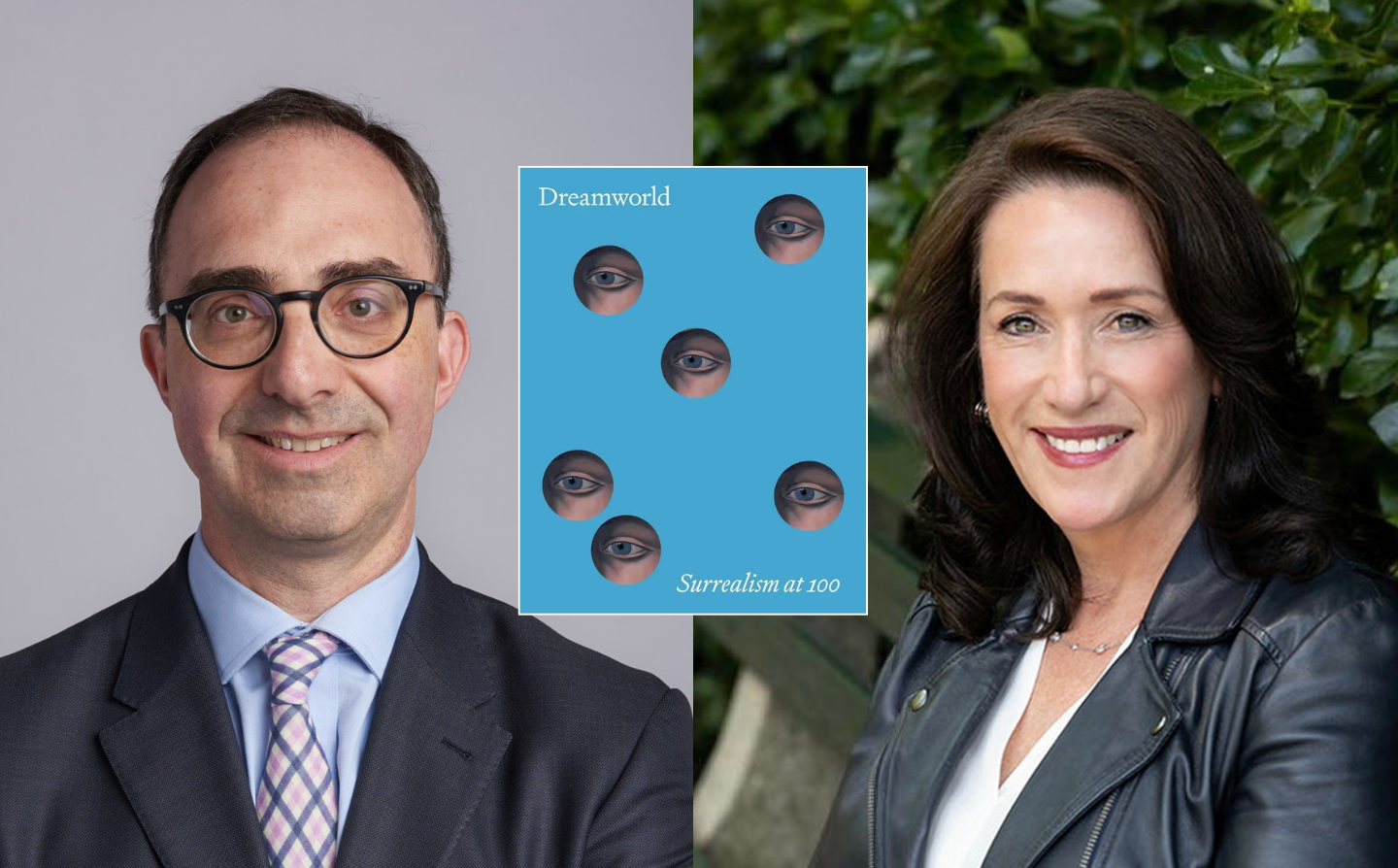
Image courtesy of the Philadelphia Art Museum
Listen on Spotify and Apple Podcasts
Listen to our latest podcast episode featuring Matthew Affron, Muriel and Philip Berman Curator of Modern Art at the Philadelphia Art Museum, discussing his book Dreamworld: Surrealism at 100, published by Philadelphia Art Museum and distributed by Yale University Press.
Affron traces Surrealism from its 1924 origins in André Breton's manifesto—which asked "how should we live?"—to its evolution as both an artistic movement and a philosophy of liberation. The conversation reveals how Surrealism emerged not as a singular style but as a set of strategies for merging dream and reality, expressed through automatism, collage, found objects, and juxtaposition—techniques designed to bypass conscious control and access the unconscious.
Our conversation examines how the movement's early lyrical explorations gave way in the 1930s to urgent responses to fascism's rise, with monsters and hybrids becoming visual metaphors for political evil. Affron discusses the wartime diaspora that scattered artists from Paris to Mexico City and New York, transforming Surrealism from a Parisian phenomenon into an international force that drew on indigenous North American imagery alongside European traditions. He explains why Surrealist images are not transcriptions of dreams but invitations into unstable territory where thinking, desiring, and imagining intersect—and why these works reward openness to surprise over attempts at simple interpretation.
For anyone interested in modern art's avant-garde movements, the intersection of art and politics, or how creative communities adapt under pressure, this episode offers essential insights into a movement whose techniques are now embedded in popular culture and whose questions about imagination and freedom remain urgent today.
" Yes, surrealism put forward an idea of the image as a picture of dreams or hallucinations from the mind's eye as opposed to direct representations of the familiar concrete world.
However, on the other hand, I think art comes from art. And many of the techniques and imagery that you find in surrealist works come from other art. But they are put together in a creative and original way. And to me that is a very useful way of thinking about where does this art come from.”
– Matthew Affron
About the Author
Matthew Affron is the Muriel and Philip Berman Curator of Modern Art at the Philadelphia Art Museum. He holds a Ph.D. in art history from Yale University and has published extensively on early abstract art, Fernand Léger, and modern art's relationship to politics. His previous books include Paint the Revolution: Mexican Modernism, 1910–1950, The Essential Duchamp, and Inventing Abstraction, 1910-1925. A specialist in the work of Fernand Léger, Affron has curated and co-curated several major exhibitions at the Philadelphia Art Museum and other institutions.
About the Exhibition
Dreamworld: Surrealism at 100 is on view at the Philadelphia Art Museum through February 16, 2026. The exhibition features approximately 200 works by more than 70 artists, with highlights including Joan Miró's Dog Barking at the Moon (1926), Salvador Dalí's Soft Construction with Boiled Beans (Premonition of Civil War) (1936), and Dorothea Tanning's Birthday (1942). Philadelphia is the sole North American venue for this international centennial celebration, following distinct iterations at the Centre Pompidou in Paris, and museums in Brussels, Hamburg, and Madrid. Learn more here: https://www.visitpham.org/exhibitions/dreamworld-surrealism